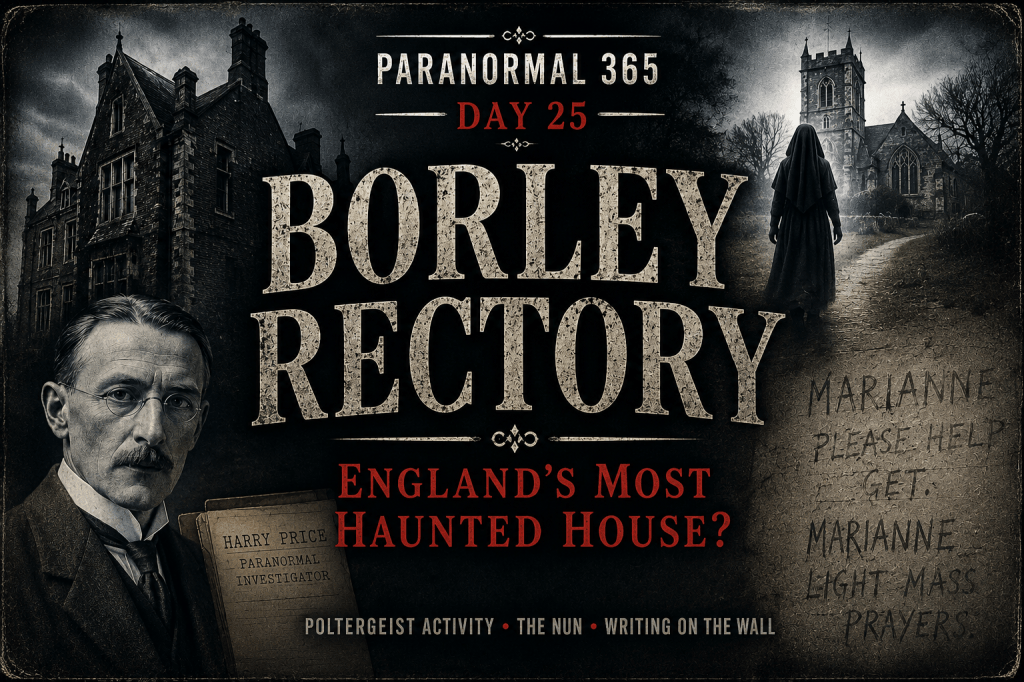
Borley Rectory – England’s Most Haunted House?
For almost a century, Borley Rectory in Essex has carried the title “England’s Most Haunted House.” It has inspired books, television programmes and countless paranormal investigations. Yet behind the legend lies one of the most controversial investigations in paranormal history.
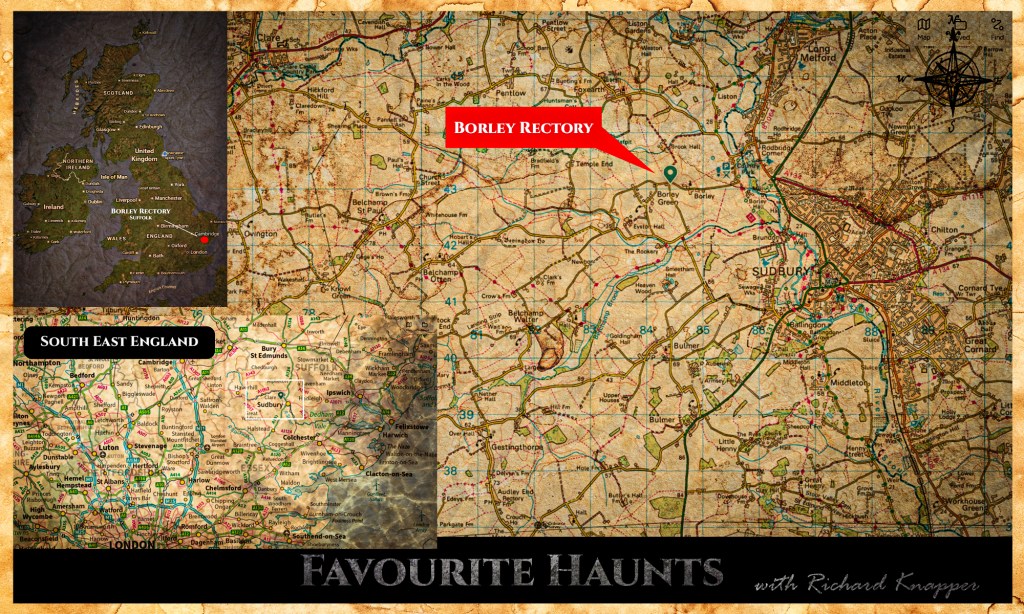
Click on map for expanded version.
The Victorian rectory was built in 1862 beside St Mary’s Church, located in the hamlet of Borley in Suffolk.
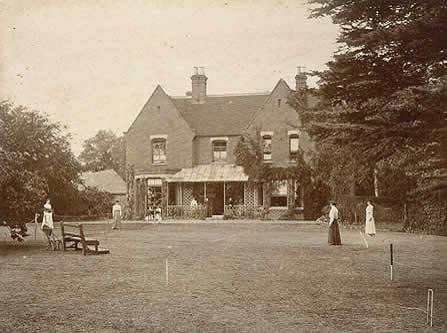
The Rectory before it was destroyed by fire in 1939
Almost from the beginning, those who lived there reported strange occurrences. Unexplained footsteps echoed through empty corridors, doors opened and closed on their own, bells rang without anyone touching them, and witnesses claimed to see the ghostly figure of a nun silently walking the path between the rectory and the church.
Everything changed in 1929.
The Reverend Guy Eric Smith and his wife contacted noted paranormal investigator Harry Price after claiming the activity had become impossible to ignore. Price visited the rectory and immediately reported witnessing extraordinary phenomena for himself.
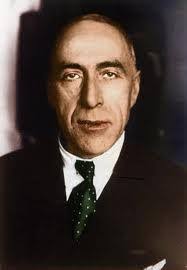
Harry Price “Ghost Hunter”
During his first investigation, small stones and objects were allegedly thrown through rooms without any visible source. Vases were said to move across tables, glasses toppled over, and other items appeared to be hurled by an unseen force. Price believed these incidents bore all the hallmarks of poltergeist activity, a type of haunting characterised by the movement of physical objects rather than ghostly apparitions.
One of the most disturbing aspects of the case centred on Marianne Foyster, who moved into the rectory with her husband, the Reverend Lionel Foyster, in 1930.
According to Marianne, the disturbances became increasingly violent. She reported being slapped, pushed and even thrown from her bed by unseen hands. Household objects were allegedly launched across rooms, furniture moved by itself and loud knocks reverberated throughout the building at all hours.
Then came perhaps the most famous incidents of all.
Messages began appearing on the walls.
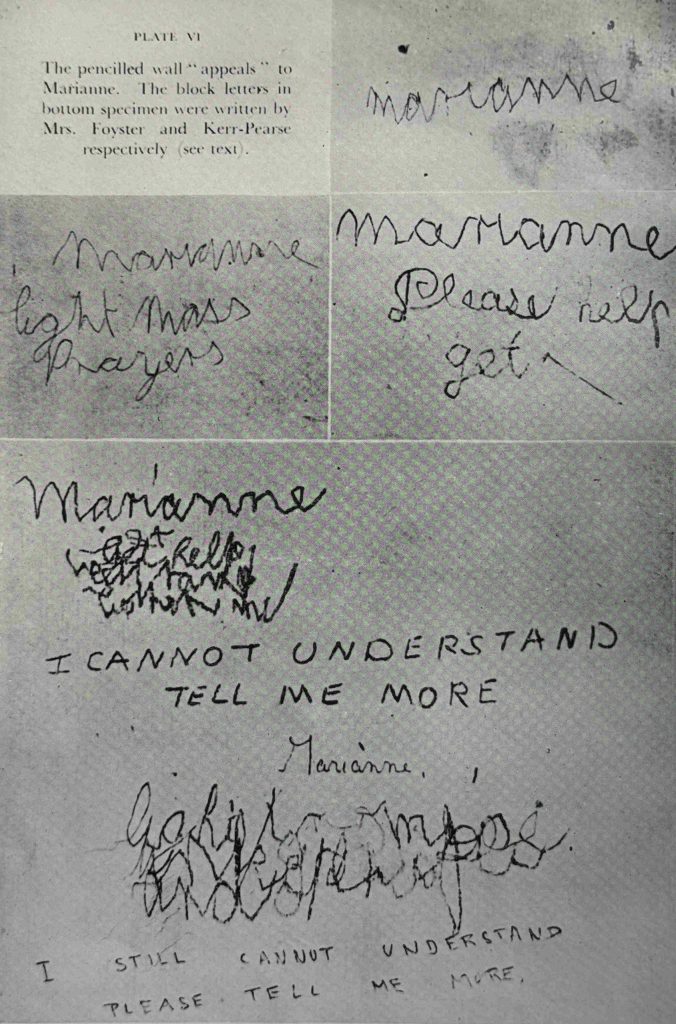
Handwriting found on the walls of Borley
Written in pencil and other materials, the mysterious inscriptions included chilling pleas such as:
“Marianne, please help get.”
Another reportedly read:
“Marianne, light mass prayers.”
The messages appeared in different locations around the house and seemed to be directed specifically at Marianne herself. Some investigators believed they were attempts by a trapped spirit to communicate.
Believers linked the writings to the legend of the ghostly nun, suggesting the spirit was begging for prayers to free her soul.
Sceptics, however, have long questioned the authenticity of the messages, noting that they appeared primarily while Marianne was present and that no one was ever seen writing them.
Following the Foysters’ departure, Harry Price leased Borley Rectory himself in 1937. Rather than living there permanently, he organised what was one of Britain’s earliest large-scale paranormal investigations. Teams of volunteers spent nights inside the building under controlled conditions, documenting every sound, movement and unexplained event in detailed logbooks.
Price later published his findings, concluding that Borley Rectory was genuinely haunted and famously describing it as “the most haunted house in England.”
His books became bestsellers and cemented Borley’s reputation around the world.
However, the story did not end there.
Many years after Price’s death, members of the Society for Psychical Research re-examined the evidence. Researchers, including Trevor H. Hall and later Paul Tabori and Ivan Banks, argued that several of Price’s claims had been exaggerated or were poorly evidenced. They also suggested that some incidents, particularly aspects of the wall writings and reported poltergeist activity, could have been explained by human intervention rather than the supernatural.
Adding another layer to the mystery, the rectory was destroyed by fire in 1939, before many claims could ever be independently investigated.
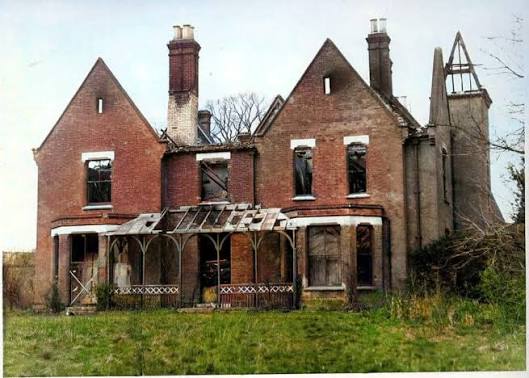
Today, only the foundations remain.
So, was Borley Rectory genuinely haunted?
Or did expectation, folklore and one of Britain’s most charismatic paranormal investigators create a legend that grew beyond the available evidence?
That question remains unanswered.
Richard’s Verdict
Evidence Rating: ⭐⭐⭐☆☆ (3/5)
Borley Rectory is one of the most documented paranormal cases in British history, but documentation is not the same as proof.
The reported poltergeist activity, apparitions and mysterious wall writings are compelling, yet much of the evidence passes through the hands of Harry Price, a brilliant investigator, but also a gifted showman whose methods have been criticised for decades.
It’s entirely possible that genuine unexplained events occurred at Borley. Equally, it’s likely that folklore, media attention and human psychology amplified the legend over time.
For me, Borley remains one of Britain’s most intriguing paranormal mysteries, not because it proves ghosts exist, but because it demonstrates how difficult it can be to separate genuine phenomena from embellishment.
What do you think?
Was Borley Rectory genuinely England’s most haunted house, or did Harry Price help create one of the greatest paranormal legends of all time? Let me know your thoughts below!
#Paranormal365 #FavouriteHaunts #BorleyRectory #HarryPrice #EnglandsMostHauntedHouse #GhostsOfBritain #HauntedBritain #HauntedHistory #ParanormalInvestigation #GhostStories #Poltergeist #TheParanormal #Supernatural #EssexHistory #Mystery #HistoricalMysteries #Folklore #BritishGhostStories #HauntedPlaces #RichardKnapper

